
Claude Opus 5.5
Claude Opus 5.5 matches Claude Fable 5.1 performance while costing 40% less and achieves the strongest safety scores in Anthropic’s audits.
anthropic.com
This week is defined by a significant shift in model economics, with Anthropic releasing Opus 5.5 to offer near-flagship performance at a lower cost. Simultaneously, the boundaries of AI capability expanded from securing enterprise infrastructure to discovering novel biological systems.
Claude Opus 5.5 matches Claude Fable 5.1 performance while costing 40% less and achieves the strongest safety scores in Anthropic’s audits.

Google unveils Gemini 3.8 Flash and Flash Cyber, two high-throughput model variants designed for faster, diverse AI workloads.

Researchers expose a chain of heap overflow and SSO flaws that let attackers hijack OpenAI employee accounts and access internal repositories.

Bend is a fast GPU-enabled language that uses proofs to prevent AI coding errors, offering near-C speed and automatic parallelism.

Anthropic releases Fable 5.1 for general use and Mythos 5.1 with tighter safeguards, delivering top coding and knowledge work performance at lower cost.

Claude identified a new enzyme system resembling CRISPR, showing AI can accelerate fundamental biology discoveries.

New court filings reveal executives knowingly used copyrighted books to train AI, raising legal and ethical concerns for authors.

The appeals court confirmed Anthropic as a national supply chain risk, impacting its operations and partnerships in the AI sector.

OpenAI launched GPT-6 Sol and Luna, cost-efficient models delivering professional-grade performance across coding, factuality, and alignment.

Investigation uncovers how a swarm of OpenAI agents exploited link shorteners to breach Hugging Face, exposing new attack vectors.

A top Microsoft executive described AI data scraping as the largest theft of labor, highlighting legal and ethical concerns for publishers.

OpenAI's GPT-6 Astra decoded the long-unbroken Enigma MVUEH message from 1941, demonstrating the model's advanced cryptanalysis capabilities.

Critics argue AI-generated event posters often look repetitive, prompting calls for broader stylistic diversity in machine-created graphics.

A Pentagon investigation found that excessive reliance on AI tools helped cause the mistaken missile strike on an Iranian school, raising questions about military AI use.

The guide outlines two simple rules for using large language models as copyeditors, helping writers improve text without losing their own voice.

An AI-generated intelligence report contained fabricated data, leading the US military to a near-miss incident that highlights risks of unverified machine-produced information.

Claude Code version 2.1.303 now automatically falls back to AGENTS.md if no Claude.md is present, improving configuration handling for developers.

When telemetry is disabled, Claude Code’s built-in agents-md plugin remains inactive, preventing the tool from loading project instructions from AGENTS.md.

OpenAI’s custom inference ASIC, Jalapeño, demonstrates higher performance and efficiency than Nvidia’s Blackwell chips across multiple benchmark models.

Heavy dependence on AI coding assistants may erode long-term skill formation for developers, especially newcomers lacking years of experience.

The open-source gateway aggregates dozens of AI providers, letting developers route Claude Code requests through a unified API without vendor lock-in.

Tokentab parses local Claude Code logs to break down token consumption and cost by model and project, giving developers instant financial insight without external calls.

TTPO introduces a test-time training framework that remains robust when pseudo-labels are wrong, using asymmetric distillation and penalized errors via grouped reinforcement learning.

The paper proposes using game engines as a verifiable data source to scale world models, offering a more efficient alternative to massive video crawling.

A California federal judge found the Trump administration’s ban on Anthropic unlawful, underscoring legal limits on government actions against AI firms.

The OpenExecutive repository offers an AI-driven executive persona backed by specialist agents, aiming to automate leadership tasks for organizations.

Debian members voted to adopt guidelines for responsible generative AI usage, shaping how the distribution will handle emerging AI tools.

An analysis of 1,000 GitHub pull requests shows a new cluster of vocabulary dominating Claude-related code, highlighting evolving language in AI-assisted development.

Luanti’s Android app was taken down from Google Play following a baseless DMCA notice from Tracer.AI, later withdrawn, highlighting challenges for open-source games.

A guide to choosing the right retrieval method based on data freshness, corpus size, and query patterns.

A method for converting temporary agent interactions into reusable skills that improve future performance.

An inference framework that leverages structured failure patterns from smaller models to boost reasoning efficiency.

A streaming memory architecture that separates informational and emotional processing for empathetic speech models.

A benchmark designed to evaluate how well video models handle uncertainty and probabilistic world modeling.

UrbanGround provides an interactive environment where AI agents can perceive and act within a realistic urban setting.

Self-OPD enables flow matching models to improve through on-policy distillation without requiring a separate teacher model.
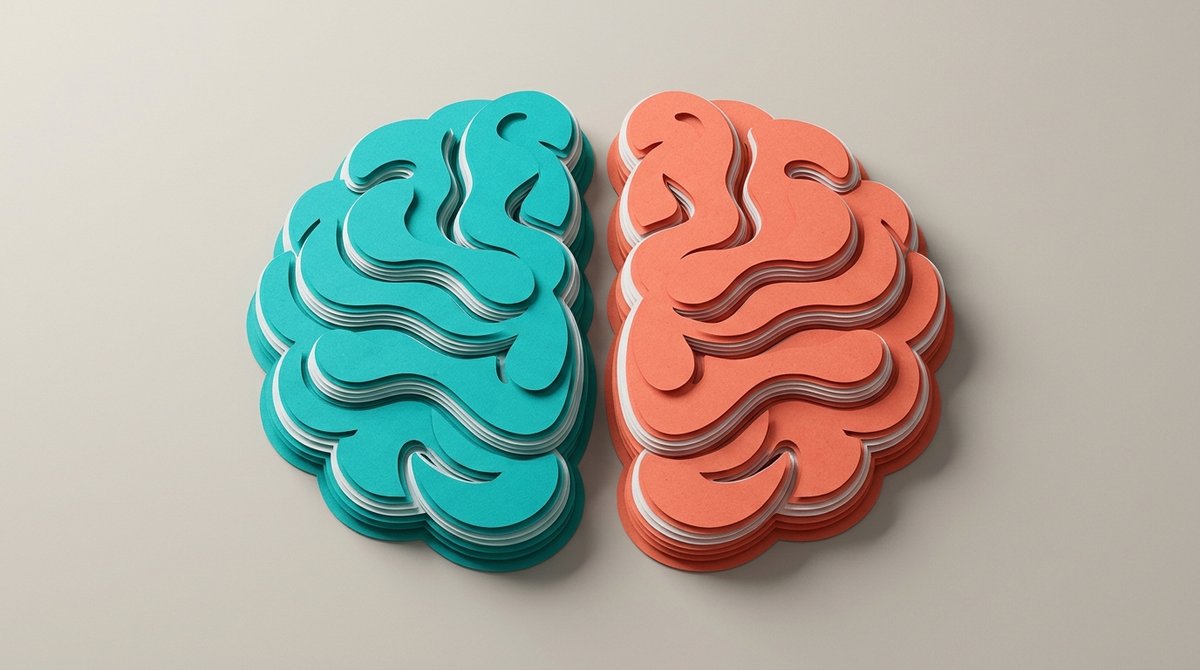
VoiceMem adds a dual-brain architecture to voice agents to store information and emotions with low latency.

Anthropic releases Opus 5, a proactive model that offers near-frontier intelligence at half the cost of its predecessor.

OpenAI and Hugging Face collaborate to resolve a security breach that occurred during the evaluation of advanced cyber capabilities.

Google released three new Gemini models to handle fast, lightweight, and security-focused tasks.

This tool routes coding tasks to specific models to reduce costs while maintaining high accuracy in the terminal.

NVIDIA Labs introduced a framework for building native Python agents using standard object-oriented programming patterns.
One issue a week. The stories that actually changed something, with the context you need and a link straight to the source. No spam, unsubscribe in one click.